
My Sleep Experiment: How I Tracked and Mastered Nightly Recovery
 BY Kanat Nazarov
We often view sleep as a passive chunk of time—a dead zone in our busy schedules where we simply turn off. In the modern wellness space, this is a massive misunderstanding. Sleep isn't just resting; it is an active, highly coordinated series of biochemical maintenance tasks.
Whether you are pushing through intense physical training like boxing, balancing a demanding daily schedule, or trying to unlock your highest creative potential, sleep is the precise window where your mind and body rebuild themselves.
To stop guessing and start optimizing, I turned my lifestyle into a data-driven experiment. I began tracking my nights using wearable tech to pull back the curtain on my recovery metrics. Below is the full breakdown of how managing my sleep architecture unlocked a new baseline of focus, physical strength, and mental clarity.
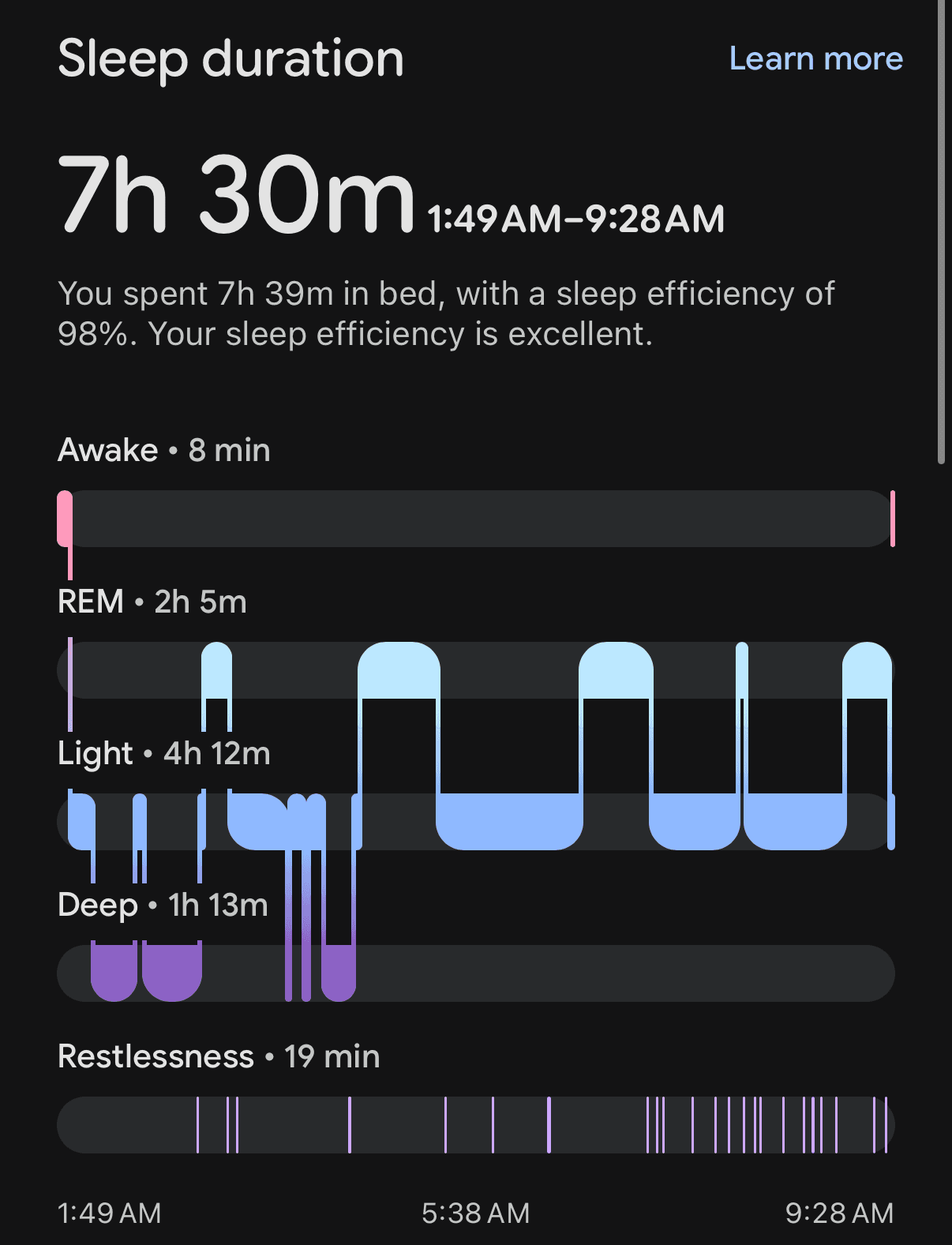
Data visualization chart from a wearable app displaying a 7h 30m sleep duration log with breakdown of deep, light, REM, and awake stages.
Instead of relying on textbook theories, I wanted hard numbers. Here is a direct look at my tracking data from a typical, optimized night in my routine:
Sleep Score: 84 (Optimal): This score aggregates total time, disruptions, and phase transitions. Hitting the mid-84s consistently is a sign that the nervous system is in harmony.
Total Sleep: 7h 30m: Just a half an hour shy of the golden 8-hour mark, providing the body ample time to clear out cellular waste.
Sleep Efficiency: 98%: This is a key metric. High efficiency means that once my head hits the pillow, my body shifts immediately into sleep mode rather than wasting time tossing, turning, or waking up intermittently.
Restfulness: Optimal: This indicates minimal movement or micro-awakenings, allowing the brain to move smoothly between deep and light cycles.
1. Deep Sleep: The Physical Construction Site
Deep sleep is the physical repair phase of the night, occurring predominantly during the first half of your sleep cycle. During this time, your brain waves slow down to synchronized, massive Delta waves, your heart rate drops, and your muscles fully relax.
This phase is critical because it triggers a massive release of Human Growth Hormone (HGH). HGH is the catalyst for tissue repair. It takes the clean nutrients from your diet and immediately routes them to fix torn muscle fibers from heavy workouts, maintaining physical strength and accelerating athletic recovery.
The Skin Health Factor: For anyone focused on skin vitality, deep sleep is the ultimate bottleneck. This phase accelerates cellular turnover. While your targeted evening skincare routines protect the surface, the surge in systemic blood flow during deep sleep delivers essential nutrients directly to your tissues, clearing up post-inflammatory spots and restoring a healthy, vibrant glow.
2. REM Sleep: Mental Defragmentation and Focus
If deep sleep fixes your physical hardware, REM (Rapid Eye Movement) sleep refactors your mind. Occurring mostly in the second half of the night, REM is the phase where your brain becomes a hyperactive sorting machine.
During REM, your brain processes the short-term information gathered throughout the day—whether it’s a complex logic problem you solved, a new creative concept, or an intricate jazz chord progression practiced on the guitar—and catalogs it permanently into your long-term memory.
REM is also the only time your brain completely shuts off stress chemicals like noradrenaline. It processes the high-pressure events of your day in a completely calm, neurochemical environment. Skipping your REM windows triggers higher morning stress hormones, leading directly to brain fog, irritability, and sluggish morning energy.
3. The Glymphatic Flush: Rinsing the Brain
During waking hours, intense mental activity creates metabolic waste products in the brain tissue. Think of it as cumulative clutter that slows down your mental processing speed over time.
When you enter deep sleep, an incredible biological phenomenon takes place: your brain cells physically shrink by roughly 60%. This temporary expansion allows cerebrospinal fluid to rush through your brain tissue like a high-pressure rinse, literally flushing away the day's toxic metabolic waste. If you have ever woken up with a "heavy head" or grogginess despite sleeping a few hours, your body simply didn't have enough time to complete this vital rinse cycle.
The Parameters: How to Replicate These Metrics
Achieving a highly efficient 95% sleep rating doesn't happen by accident. It requires setting up the environmental parameters correctly before shutting down for the night:
- The Light Blockout: Artificial blue light from phone screens and laptops suppresses melatonin, the master sleep hormone(in my case scanerio before the bed i turn my phone to grayscale mode). Disconnecting from all digital screens at least 45 minutes before sleep allows the nervous system to wind down naturally.
- Temperature Control: Your core body temperature must drop slightly to initiate deep sleep phases. Keeping your bedroom crisp, cool (around 65–68°F / 18–20°C), and well-ventilated signals the body that it’s time to recover.
- No Latent Digestion: Avoid heavy, high-fat meals late at night. Digestion forces blood flow to your stomach instead of your brain, completely stalling your body's natural brain-flushing routine and delaying your deep sleep cycles.
The Conclusion
Sleep is not a luxury, nor is it a sign of laziness. It is the absolute foundation of physical power, mental sharpness, and systemic health. When you protect your sleep architecture, you aren't wasting time—you are giving your body the space it needs to build a highly optimized version of you for tomorrow.
Optimize your environment, track what matters, and respect the data.
How do you optimize your nights for peak daily performance? Leave your thoughts below or explore my other case studies on human optimization.